Across Africa, conversations about financing democracy are growing more urgent. From sovereign endowment funds to diaspora-backed financing mechanisms, new ideas are emerging to reduce dependence on external aid and strengthen democratic institutions. Yet one critical question often remains unanswered: who will implement these models inside government systems, and how will they be sustained over time?
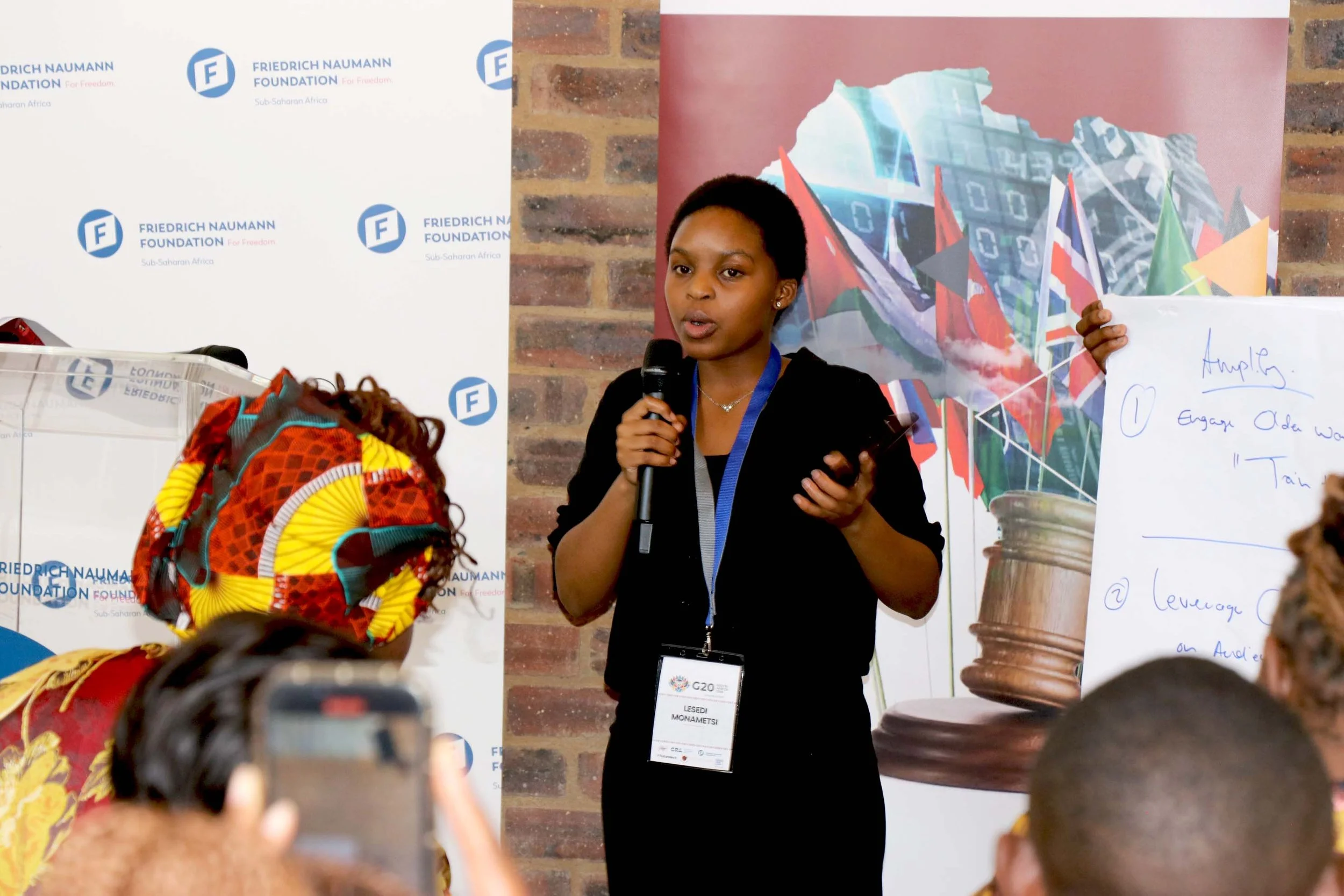
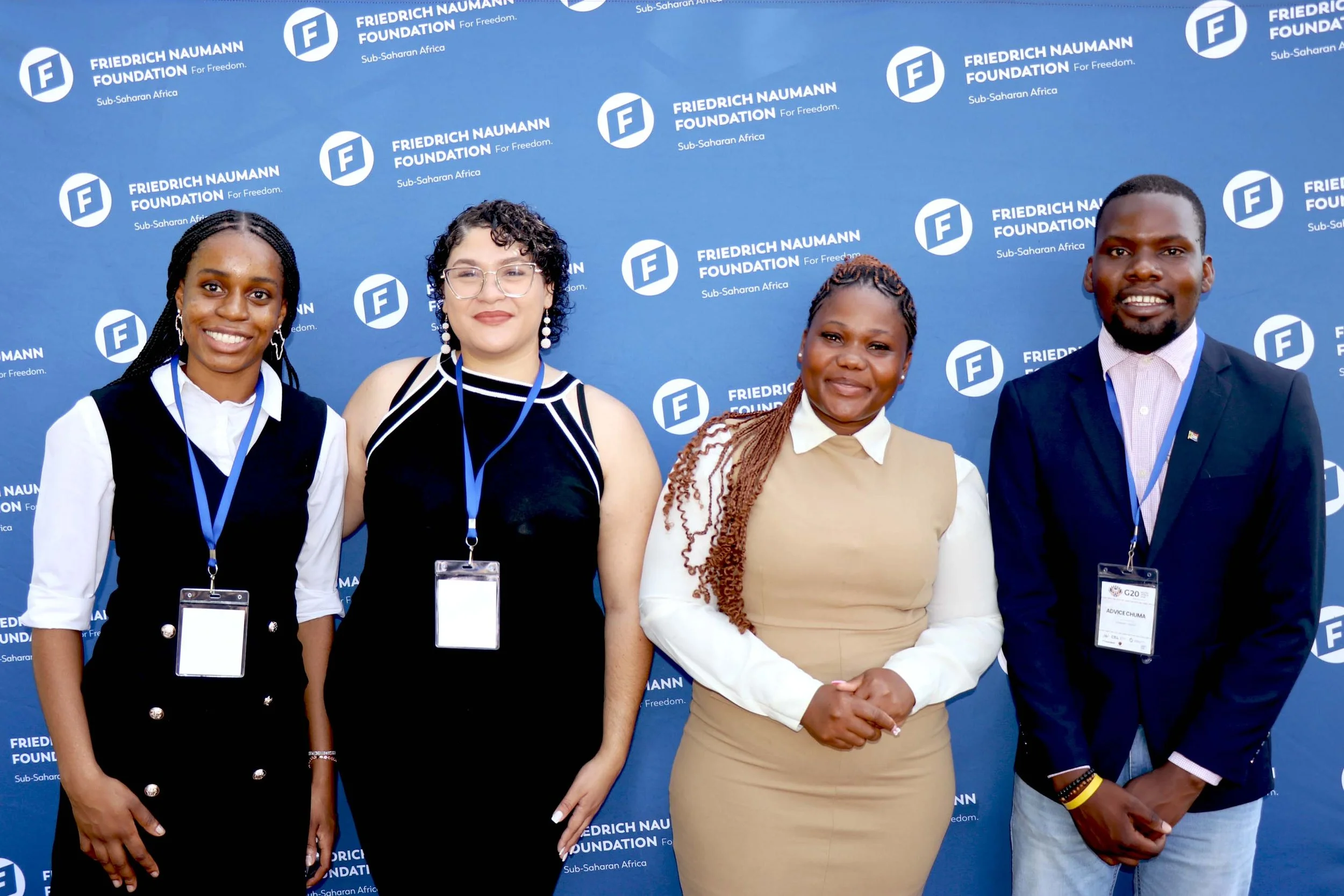
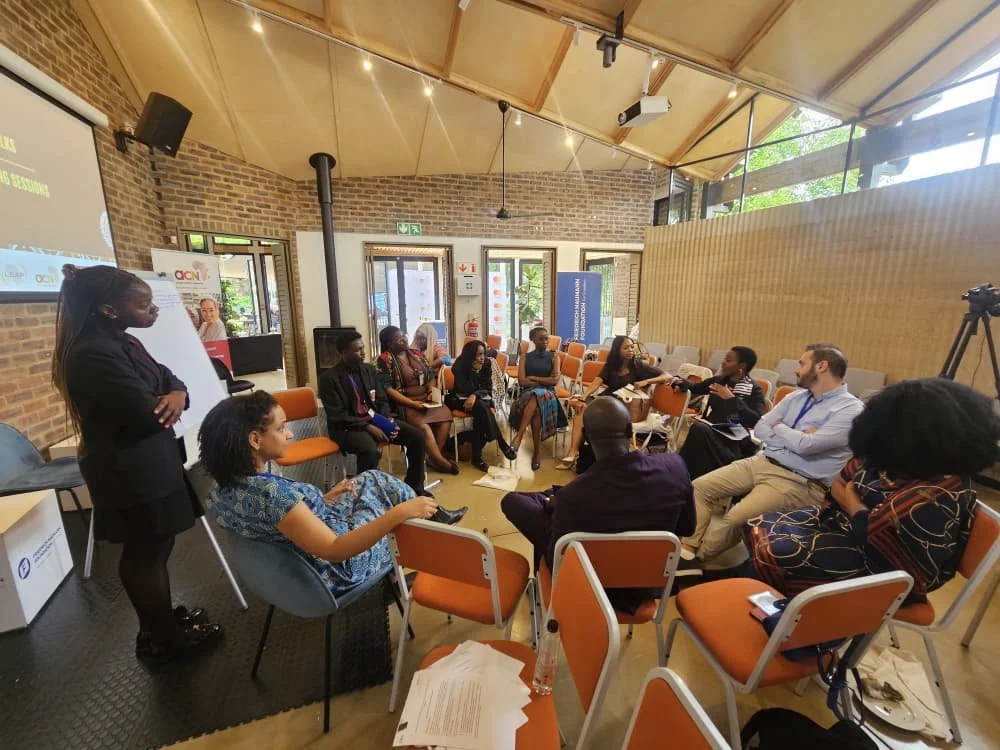
The Governance Consortia, a partnership between EPL, African Leadership Academy, LEAP Africa, and the ALU Center for Re-imagined Africa, with the support of Friedrich Naumann Foundation for Freedom, sought to answer this question and more during discussions at the G20 sideline event, African Futures: Sustainable Models for Financing Democracy and Development, held in Johannesburg in November 2025.
The convening brought together youth leaders, policymakers, and governance practitioners to explore African-led approaches to financing democracy and development in ways that are both sustainable and locally grounded. The official report from the event concluded that financing democracy is not only a matter of resources, but also fundamentally an institutional challenge.
From Financing Models to Institutional Capacity
Throughout the convening, participants explored a range of innovative mechanisms, including community crowdfunding, diaspora remittance funds, civic movement financing, and democracy endowments. While these ideas sparked strong interest, discussions repeatedly returned to a familiar reality.
Many public institutions across Africa lack the human capital, systems, and operational flexibility required to absorb and manage new financing streams effectively. Without skilled professionals inside government who understand both public finance and democratic accountability, even the most promising funding models risk remaining theoretical or underutilized.
This gap between ideas and implementation is precisely where Emerging Public Leaders (EPL) focuses our work.
Why Youth Embedded in Government Change the Equation
EPL’s unique approach to leadership or advocacy programs embeds young leaders directly within government and public sector-facing institutions, where they serve their communities, strengthening service delivery, policy implementation, and accountability from within public service.
At the G20 sideline event, EPL brought an implementation-focused lens to discussions on youth-centered financing. Drawing on fellowship experiences, EPL highlighted how young professionals working inside government systems help translate financing ideas into practice, navigating procurement rules, aligning reforms with national budgets, managing political constraints, and supporting continuity beyond election cycles.
This perspective is closely aligned with one of the event’s core conclusions: democratic institutions must outlast individual leaders and be supported by durable structures, skilled personnel, and clear governance frameworks.
De-Risking Investments in Democratic Reform
For donors and partners, this insight is critical.
Too often, investments in democratic reform focus on short-term projects or parallel structures that struggle to scale or endure. The G20 sideline convening reinforced that sustainable financing for democracy requires institutional stewardship, people inside government who can manage funds responsibly, uphold transparency, and adapt reforms over time.
By building a pipeline of young leaders who are both value-driven and institutionally fluent, EPL helps reduce the risks associated with governance reform investments. Our model increases the likelihood that new financing mechanisms, whether domestic, diaspora-based, or regionally pooled, will be absorbed, governed and sustained within public systems.
A Strategic Opportunity for Donors
As highlighted in the event’s youth-led policy recommendations, Africa’s democratic future depends on stronger domestic resource mobilization, improved civic and financial literacy, and deeper youth participation in public finance processes. Achieving these goals will require more than capital injections; it will require people capable of stewarding reform from within institutions.
Our work demonstrates how targeted investment in youth placed in government as entry-level public servants can deliver long-term returns: stronger institutions, more accountable use of public resources, and democratic systems that are less vulnerable to political turnover.
As donors and partners consider how best to support democratic resilience in Africa, the message from Johannesburg is clear: financing democracy works best when investments in ideas are matched with investments in institutional capacity, and that capacity is already being built by the next generation of public leaders.
Download the PDF of the full report to read more
Watch the full event on Futurelect’s YouTube channel