From Liberation to Delivery: What Kigali Taught Me About Africa’s Next Chapter
By Mosenah T. Bility
As a President’s Young Professional (PYP), my role is to ensure that government commitments translate into results. I did not expect the gap between commitment and delivery to become the defining question of a continental forum, discussed not only by public servants and technocrats, but by presidents, former heads of state, CEOs, and leading African thinkers.
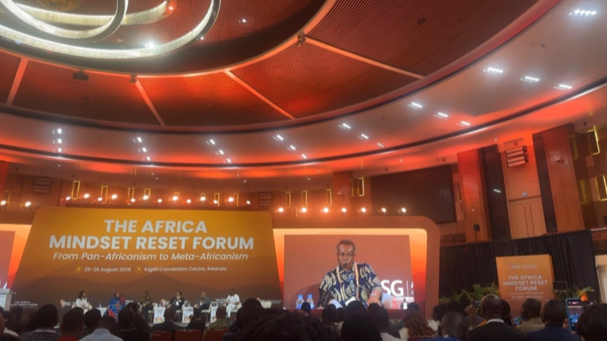
The inaugural Africa Mindset Reset Forum, convened by the African School of Governance and supported by the Mastercard Foundation in Kigali, Rwanda, laid the intellectual groundwork, and two days of high-level discussions focused on commitment versus delivery.
I returned to Liberia with one conviction strengthened: Africa’s transformation will not be achieved by vision alone. It depends on the people and institutions willing to bring discipline to the often-unnoticed work of turning vision into reality.
The forum’s central idea, the movement from Pan-Africanism to “Meta-Africanism,” challenged me to reflect more deeply on Liberia’s own history. Liberia is one of only two African countries that were never formally colonized and has been self-governing since 1847. In many respects, our country experienced its political liberation before much of the continent. Yet, nearly two centuries later, Liberia, like many African countries, continues to build the industrial base, institutional systems, and delivery capacity required to convert political independence into broad-based prosperity.
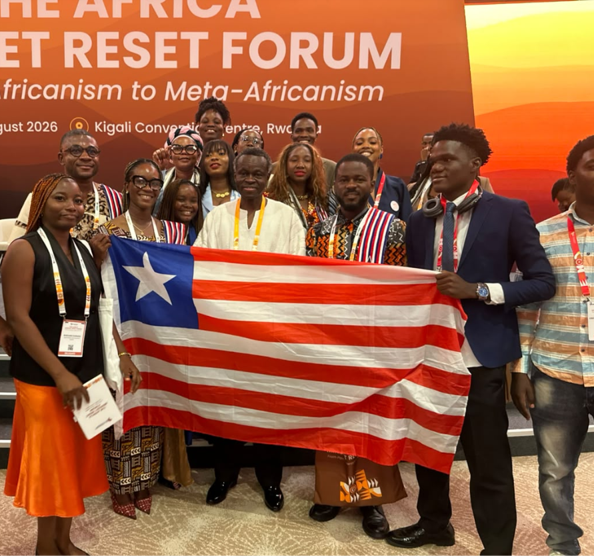
The forum brought into focus that liberation, dignity, and political independence were essential achievements, but they were only the beginning. Africa’s next chapter must be defined by institutional capability, economic transformation, accountable leadership, and the consistent execution of national priorities. Meta-Africanism, as discussed at the forum, is not a rejection of Pan-Africanism. It is a call to build upon it; to move from unity and aspiration to the systems, discipline, and cooperation needed to produce tangible results for African citizens.
One observation that stayed with me came from Dr. Sidi Ould Tah, President of the African Development Bank, who noted that Africa’s confidence is often lower than its actual capacity. That statement challenged a narrative I have heard throughout my life: that Africa’s challenges are primarily caused by a lack of money, skills, or opportunity. While resources matter, the forum presented a more complex reality: the continent possesses considerable talent and potential but struggles to coordinate these assets and execute consistently.
President Paul Kagame of Rwanda expressed a similar idea when he described the transformation as a shift from “having all we need” to “having the Africa we want.” The difference between the two is not simply resources. It is leadership, choices, institutional strength, and discipline to follow through.
As a Fellow of the PYPP assigned to the President’s Delivery Unit, my work is closely connected to this coordinated transformation. The Unit tracks commitments, follows up on implementation, identifies bottlenecks, and supports efforts to ensure that government priorities move beyond announcements and into measurable action.
The forum’s discussions were enlightening. Former South African President Thabo Mbeki and Prof. Patrick Loch Otieno Lumumba spoke about leadership, honesty, and mutual accountability. Ghana’s Vice President, Jane Naana Opoku-Agyemang emphasized returning to fundamentals and building the Africa that citizens have worked and sacrificed for. One message emerged repeatedly: Africa does not suffer from a shortage of ideas. The challenge is maintaining the coordination, accountability, and execution discipline necessary to implement those ideas over time.
During a networking conversation at the forum, I shared a related reflection that Liberia’s history demonstrates that liberation and prosperity are not the same achievement, and that institutions such as delivery units have an important role in narrowing that gap. It was a moment in a gathering full of prominent leaders, but it captured the perspective I carried from Liberia: transformation depends not only on what governments announce, but on the systems that ensure commitments are delivered.
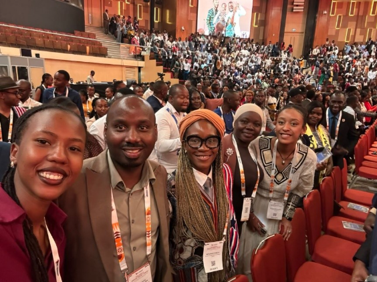
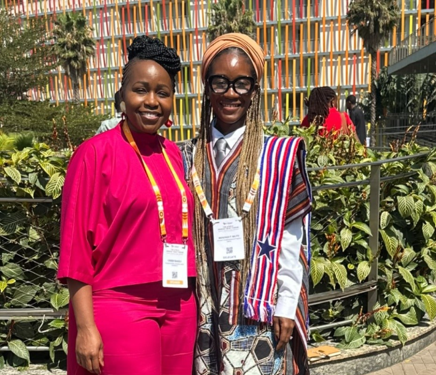
The forum also connected me with young professionals, reform-minded leaders, CEOs, and CEOs and senior executives from across the African continent. My engagement and experience at the forum is a testament to the unique value of the President’s Young Professional Program (PYPP) and the Emerging Public Leaders network that has grown from the program’s model as a powerful platform for cultivating leadership in public service.
The Africa Mindset Reset Forum deepened my understanding of my assignment within Liberia’s President’s Delivery Unit at the Ministry of State. I returned to Liberia convinced that tracking commitments, supporting implementation, and helping institutions overcome obstacles are critical efforts at the centre of Africa’s development agenda.
Liberia has lived through the era of liberation. The responsibility of this generation is to build the institutional machinery that transforms that liberation into opportunity, dignity, and a better life for every citizen. I am grateful to contribute, however modestly, to that work.